
⚡ Behind the Scenes: HLS vs MP4 - Why Modern Web Streaming is So Smooth
🤔 Ever Wondered Why Some Streaming Sites Buffer Forever?
Have you ever noticed that when you watch a movie on Netflix or YouTube, it starts instantly and you can skip around seamlessly? But when you try to watch a video on a regular website, you're stuck staring at a loading circle for minutes!
The secret to this smoothness isn't just your internet speed—it's the video format! Today, UFlix takes you behind the scenes of the streaming tech that makes buffer-free viewing possible.
1️⃣ The Heavyweight Match: MP4 vs HLS ⚔️
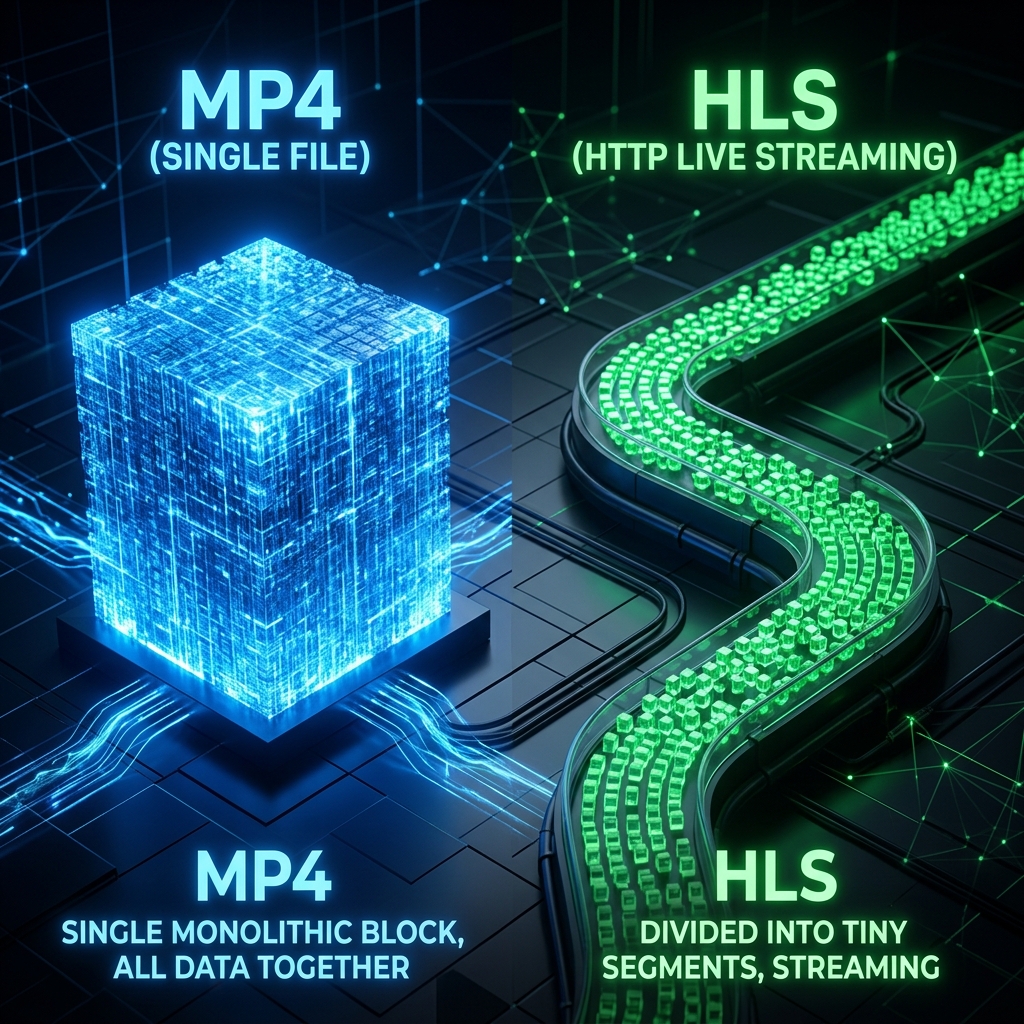
To make it easy to understand, imagine a video is a massive pizza:
- MP4 (The Old Way): It's like waiting for the entire giant pizza to be baked before you can take a bite. If your internet is slow or the file is a 5GB behemoth, your browser tries to download a huge chunk of it before playback starts. If you try to skip to the end, it completely freezes!
- HLS (The Modern Way): HLS (HTTP Live Streaming) is a technology developed by Apple that effectively slices the pizza into dozens of tiny pieces (each holding 2-10 seconds of video) and serves them to you one by one!
Why HLS Wins: ✔️ Starts instantly because you only download the first tiny slice (a few MBs). ✔️ Seamless skipping—the browser just runs and grabs that specific slice. ✔️ Adaptive Bitrate: If your internet slows down, the system automatically serves you a slightly lower-quality slice so playback never halts!
2️⃣ The Hidden Power of Google Drive ☁️

Most people view Google Drive simply as cloud storage (a flash drive in the sky). But did you know... Google Drive has an incredibly powerful video streaming engine hidden in the backend!
When you upload a video file (like MP4 or MKV), Google doesn’t just let it sit there as a dumb brick of data. Google's servers silently transcode and slice your file into HLS chunks! (It uses the exact same infrastructure as YouTube).
[!NOTE] This is why right after you upload a video to Google Drive, it says "Processing Video." That's the servers baking the pizza and slicing it up for streaming!
3️⃣ How UFlix Bypasses Bottlenecks 🚀
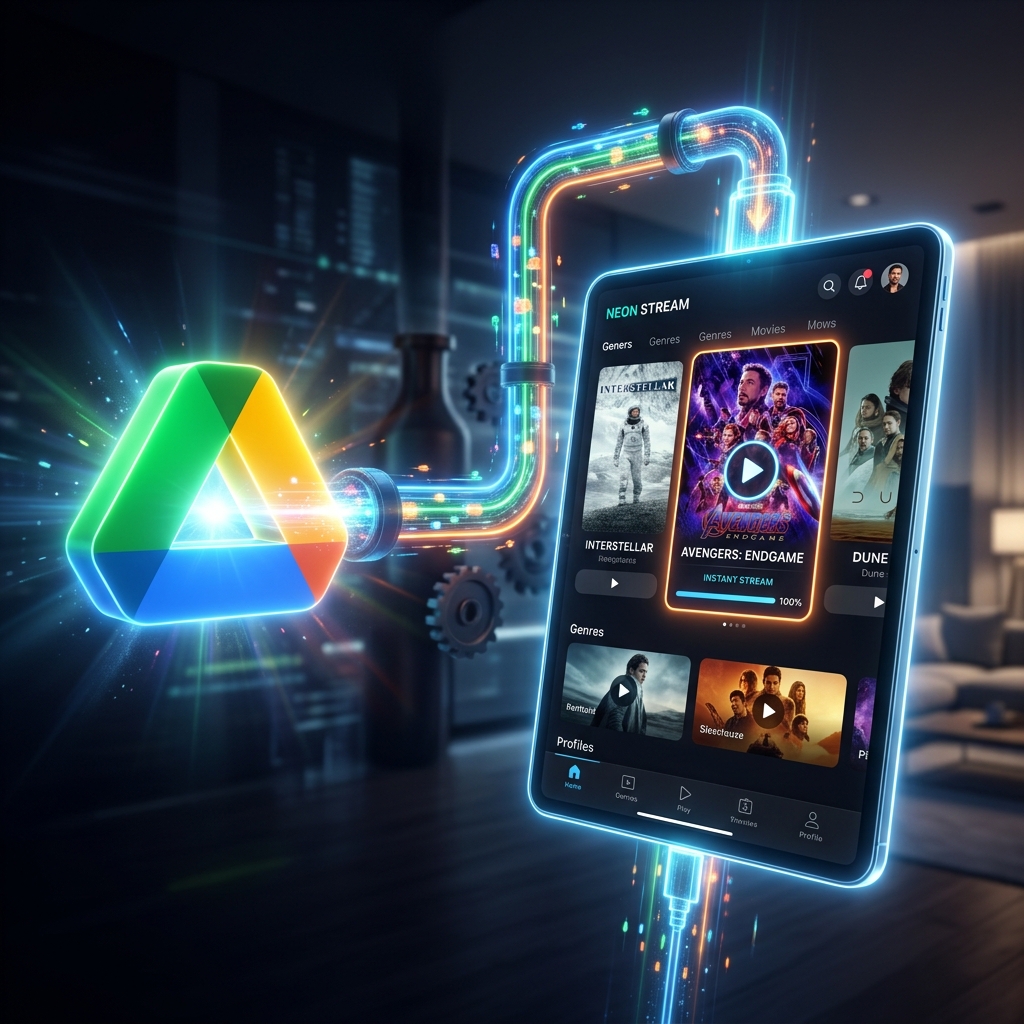
Even though Google Drive provides this amazing streaming capability, simply embedding an <iframe src="drive.google.com/..."> into a website often results in clunky performance or gets blocked by CORS (Cross-Origin Resource Sharing) security policies.
Here is what UFlix does under the hood:
- Direct API Access: Instead of lazy iframes, UFlix communicates directly with the Google Drive API to securely fetch access tokens.
- Smart HLS Player: We integrated
hls.jsdeep into the UFlix player. When fetching the stream from Drive, our player intelligently requests and assembles the HLS chunks in real-time, resulting in a Netflix-smooth experience. - Bypassing Limits: For specific video sources that throttle bandwidth, UFlix utilizes a smart Proxy Routing system that acts as a secure bridge, delivering the video to your screen without bottlenecks.
And the best part? All of this heavy lifting is done directly in your browser, requiring absolutely zero expensive backend servers! 😎